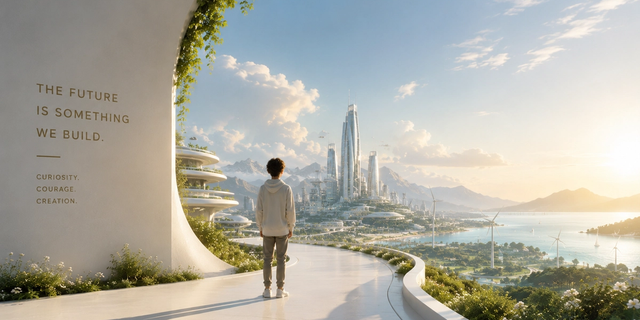
Abundance, as a concept, is the claim that technology tends to take things that were once scarce and expensive and make them plentiful and cheap, sometimes to the point where the old logic of rationing them by price stops making sense. Light was once a luxury measured by the candle; an hour of artificial light that cost a labourer a day's wages in the eighteenth century now costs a fraction of a second's. Information was once locked in libraries you had to travel to; now it arrives on a phone for the price of nothing in particular. The argument is that this is not a series of lucky exceptions but a direction.
The word carries an intellectual lineage worth knowing about. It was given a popular shape by Peter Diamandis and Steven Kotler's 2012 book of that name, which argued that exponential technologies would lift the global standard of living faster than most people expected. More recently it has re-entered political conversation through a different door, as a case that the constraint on a better future is less often raw resource than the systems and rules that govern how we build. The two strands disagree about much, but share a premise: scarcity is frequently a choice or an artefact, not a law of nature.
AI enters this story as an accelerant rather than the whole of it. If intelligence — the capacity to diagnose, design, plan, and solve — becomes something you can summon cheaply and at scale, then the cost of a great many things downstream of intelligence is supposed to follow it down: medicine, education, software, research. That is the optimist's version. It is a forecast, not an observation, and abundance has a long history of being promised on a schedule it does not keep. Cheaper does not automatically mean more fairly shared, and a falling price is not the same as a solved problem.
The human question underneath the economics is who the abundance reaches. A thing becoming cheap to produce does not guarantee it becomes available to everyone who needs it; that depends on how the gains are distributed, which is a matter of politics and institutions rather than technology. This is the gap the sceptic is usually pointing at, and it is a fair one. Abundance describes a possibility the technology opens. Whether the possibility becomes most people's lived reality is a separate question, and the answer to it has never been automatic.