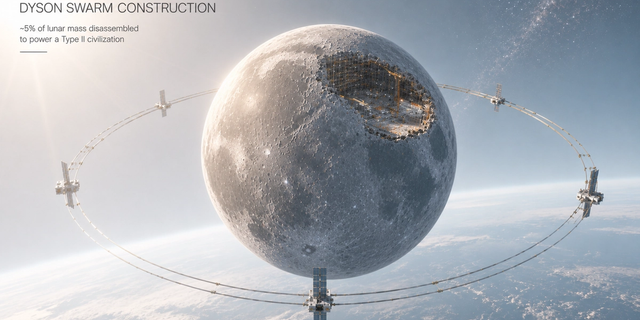
Regolith is the blanket of loose, fragmented material — dust, grit, broken rock — that sits on top of solid bedrock. The Moon is covered in it, ground down over billions of years by relentless micrometeorite impacts with no wind or water to smooth it.
Calling it "soil" is a useful shorthand but not quite right. Earth soil is alive, threaded with organic matter and microbes. Lunar regolith is sterile, sharp-edged, and chemically unlike anything that grows things — closer to powdered glass than garden dirt.
That makes one recent finding genuinely striking: researchers have managed to grow plants in actual lunar regolith, augmented with nutrients. It is difficult and the plants struggle, but it works, which is the part that matters.
The consequence is economic. The heaviest thing about keeping humans alive far from Earth is the supply chain. If settlers can grow food in the ground already beneath them — and use the same material for shielding and construction — the cost of staying on the Moon falls from impossible toward merely hard.