Technological unemployment is the name economists give to job losses caused by technology replacing human labour — not temporarily, during a downturn, but structurally, as a permanent feature of how the economy has changed. The term entered serious economic discourse in the 1930s when John Maynard Keynes predicted that productivity gains from technology would, within a century, reduce the working week to fifteen hours as machines absorbed the bulk of human toil. He was, it turns out, wrong about the direction. The working week stayed stubbornly long, and new categories of work kept appearing to fill the hours that machines freed.
The idea has a persistent, centuries-long history. The Luddite movement in early nineteenth-century Britain was a direct response to mechanisation in the textile industry — skilled weavers destroying machinery they believed would make their craft obsolete. It did displace them. But it did not produce permanent mass unemployment. Industrial manufacturing created far more jobs than the cottage industries it replaced, at higher wages and with broader economic participation. The same arc — disruption followed by expansion — has replayed with electrification, computing, and the internet.
The distinction that matters in practice is between transitional unemployment — the real, painful disruption that happens as workers move between shrinking and growing sectors — and structural technological unemployment, the predicted permanent state. The first is well-documented and deserves genuine attention: people in declining industries face real hardship, and the pace of retraining, geographic mobility, and support systems all determine how long that hardship lasts. The second — the permanent version — has been predicted with confidence before every major technological wave and has not materialised in any of them.
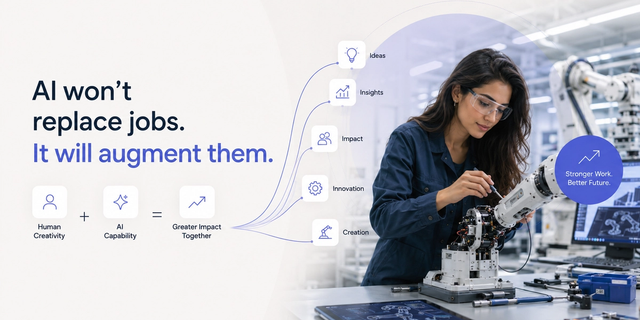
AI has renewed the debate with fresh urgency. Unlike previous technologies, which automated physical or repetitive tasks, AI can perform cognitive work — writing, reasoning, analysis, coding — that was previously considered distinctly human. Whether this changes the historical pattern, or merely extends it to a new domain, is genuinely contested. What is not contested, at least by the economists who have studied the data carefully, is that so far the pattern looks familiar: the jobs most exposed to AI are shifting in character rather than disappearing, and new roles — in AI oversight, in applications, in adjacent domains — are forming around the technology rather than against it.